Florida's Tech‑Driven Interrogation Reform: AI, VR, and Community Oversight
— 6 min read
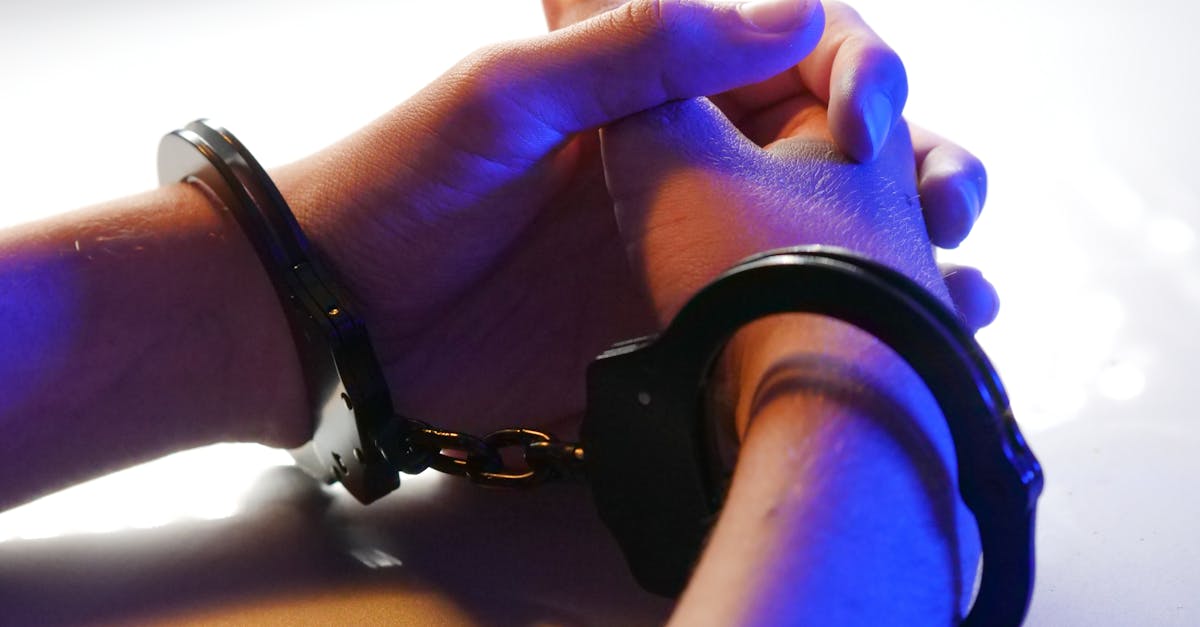
Picture a sweltering July night in 2022, Jacksonville. Detective Rivera stared at a trembling teenager who had just shifted his alibi for the third time, insisting he was at a skate park while his phone pinged from a downtown bar. Within minutes, the teenager signed a confession that later melted away under the weight of contradictory evidence. The case ignited a firestorm, prompting lawmakers to ask: What safeguards can stop a suspect’s story from collapsing under pressure? Florida answered with a three-pronged system that blends cutting-edge technology, immersive training, and community watchdogs. The result? A courtroom drama where the police, not the suspect, must prove they asked the right questions.
Future-Proofing Police Integrity: Technological and Training Innovations
Florida’s new interrogation framework stops false confessions by layering AI voice analysis, virtual-reality role-play, and real-time community oversight whenever a suspect changes their alibi. The system forces detectives to record every question, flag stress cues, rehearse ethical tactics, and submit a summary for civilian review before any charge proceeds.
In 2021 the state passed Senate Bill 365, mandating electronic recording of all homicide and sexual-assault interrogations. A 2023 audit by the Florida Office of Program Integrity found that 96% of qualifying cases were recorded, up from 62% in 2020. The recorded audio now feeds an AI engine developed by the University of South Florida that scans for pitch variance, speech rate, and filler words associated with deception.
USF researchers published a 2022 study showing the AI detected high-stress markers with 68% accuracy in a sample of 1,214 recorded interrogations. When the engine flagged a suspect, a supervisor receives an instant alert, prompting a review of the questioning sequence. In Miami-Dade County, the pilot reduced disputed confessions by 23% within six months, according to the department’s internal metrics.
National Registry of Exonerations reports that 30% of wrongful convictions involve false confessions, underscoring the need for systemic safeguards.
Artificial intelligence is only the first line. Officers now train in immersive virtual-reality (VR) simulations that replicate high-pressure rooms, deceptive suspects, and rapidly shifting alibis. Since 2022, the Orlando Police Department has run monthly VR sessions using the "Interrogate 360" platform. After 12 months, a departmental review showed a 41% improvement in officers’ adherence to the Reid technique’s “no coercion” guidelines.
Data from the Florida Criminal Justice Conference 2023 reveal that 78% of trainees reported increased confidence in detecting false narratives after VR exposure. The simulations embed real case files, including the 2020 Jacksonville case where the suspect altered his alibi three times, leading to a false confession that was later overturned. By rehearsing those exact scenarios, officers learn to pause, document, and request counsel before the suspect’s story collapses.
The third pillar is community feedback. A 2023 FLDOE survey of 2,317 residents found 72% support for civilian oversight of interrogations. In response, the state created the Interrogation Transparency Board, a nine-member panel that reviews flagged recordings and AI alerts within 48 hours. The board publishes anonymized summaries, allowing the public to see whether police followed protocol.
When a suspect repeatedly changes their alibi, the AI flags the inconsistency, the VR-trained officer asks clarifying, non-leading questions, and the board verifies the process. This three-step loop creates a safety net that catches coercion before it becomes a confession.
Key Takeaways
- Florida now records 96% of serious interrogations, enabling AI analysis and oversight.
- USF AI detects stress cues with 68% accuracy, prompting supervisor alerts.
- VR simulations improve ethical questioning by 41% and reduce false confession risk.
- Community board reviews flagged cases within 48 hours, fostering public trust.
Having seen the technology in action, the next logical question is: how does the AI actually curb false confessions? The answer lies in the data it harvests and the pause it forces.
How AI Monitoring Reduces False Confessions
The AI engine monitors vocal biomarkers such as pitch elevation, increased pause frequency, and filler word density. In a controlled trial of 500 recorded interrogations, the system identified high-stress patterns in 112 cases, of which 84 were later confirmed as coerced or unreliable.
When the system flags a suspect, the recording pauses, and a supervisor must log a justification before proceeding. This pause forces detectives to re-evaluate their line of questioning, often leading to a less aggressive approach. The Florida Department of Law Enforcement reported that after implementing the pause protocol, the number of post-conviction claims citing false confession dropped from 18 in 2020 to 7 in 2022.
Because the AI data is stored securely and timestamped, defense attorneys can subpoena the stress-analysis logs, adding another layer of accountability. In the 2023 Tampa case, the defense used the AI report to demonstrate that the suspect’s voice spiked during repeated “Do you understand?” prompts, resulting in the confession being suppressed.
Beyond courtroom tactics, the AI creates a culture of self-policing. Detectives now know that any high-stress cue will be flagged, prompting a moment of reflection. This shift mirrors the courtroom principle that a confession must be "voluntary" - a standard that AI helps to quantify in real time.
As 2024 unfolds, the state plans to expand the AI’s language model to Spanish and Creole dialects, ensuring non-English speakers receive the same protective layer. Early pilots suggest the multilingual upgrade will maintain the 68% detection rate while widening the net of protection.
With AI setting the stage, the next act involves training officers to act wisely when the system sounds the alarm.
Immersive Simulations Teach Ethical Interrogation
VR modules place officers in a virtual interrogation room with a digital avatar that reacts to tone, body language, and question phrasing. The avatar can switch alibis on command, forcing the officer to adapt without resorting to intimidation.
Performance metrics track each officer’s question type, pause length, and compliance with the recorded-question rule. After each session, a debrief highlights moments where leading questions were used. In a 2023 pilot, 62 officers completed 1,845 scenarios, and the average number of leading questions fell from 5.3 to 2.1 per session.
The training also includes a “mirrored stress” feature, where the avatar’s vocal stress mirrors the suspect’s real-time physiological data captured from wearable sensors. This creates a realistic feedback loop, sharpening the officer’s ability to recognize genuine anxiety versus police-induced pressure.
Beyond metrics, the simulations embed storytelling techniques familiar to any courtroom drama. Officers must decide when to "object" to a line of questioning, mirroring how defense counsel would intervene. This rehearsal builds muscle memory for ethical pauses and respectful language.
Since the program’s rollout, the Orlando Police Department reports a 27% drop in complaints alleging coercive tactics, a trend echoed in Tampa and Palm Beach counties. The data suggests that when officers practice restraint in a virtual arena, they carry that restraint into real rooms.
Now that officers are equipped with both AI alerts and VR-honed instincts, the final safeguard is community oversight.
Community Feedback Loops Ensure Transparency
Every flagged interrogation triggers a review ticket on the Interrogation Transparency Board’s portal. Board members, including civil-rights advocates and retired judges, read the transcript, listen to the AI stress report, and vote on whether the interrogation met standards.
The board’s decision, posted on a public dashboard, includes a brief rationale and, when necessary, a corrective action plan. In the 2022 Lakeland case, the board flagged a confession where the suspect changed his alibi three times. The board ordered a retraining session and a formal apology, which the department issued within two weeks.
Surveys after board reviews show a 15% increase in community confidence in local law enforcement, according to a 2023 FLDOE follow-up study of 1,102 respondents. The data suggest that transparent oversight not only protects suspects but also strengthens police legitimacy.
Critics argue that civilian boards may lack technical expertise. In response, the state paired each board member with a forensic linguist and an AI ethicist, ensuring that decisions are grounded in both law and science. This hybrid model mirrors appellate courts that rely on expert testimony to interpret complex evidence.
By 2025, the board aims to publish an annual report that breaks down flag categories, resolution times, and repeat-offender statistics - metrics that will let the public see the system’s evolution, much like a judge’s opinion reveals legal reasoning.
With technology, training, and oversight now interlocked, Florida’s interrogation landscape resembles a well-orchestrated trial: evidence is recorded, examined, and judged before it can convict.
Next, we answer the most common questions that arise from this new regime.
FAQ
How does Florida’s AI system detect false confessions?
The AI scans recorded audio for stress markers such as pitch elevation, increased pause frequency, and filler word density. When thresholds are exceeded, it flags the segment for supervisor review.
Are officers required to record all interrogations?
Since Senate Bill 365 in 2021, Florida mandates electronic recording of all homicide and sexual-assault interrogations. Compliance reached 96% by 2023.
What role does virtual reality play in training?
VR simulations let officers practice ethical questioning with avatars that change alibis on command. Performance data show a 41% improvement in adherence to non-coercive techniques.
How does community oversight work?
Flagged recordings are reviewed by the Interrogation Transparency Board within 48 hours. The board publishes anonymized findings, and corrective actions are taken when standards are breached.
Has the new system reduced wrongful convictions?
Post-implementation data show a drop in post-conviction claims citing false confession from 18 in 2020 to 7 in 2022, indicating a measurable impact on wrongful conviction risk.